
Tampa Councilmembers Wade Into Foreign Policy Debate
TAMPA — In the wake of new developments involving Venezuela, two Tampa City Councilmembers, Alan Clendenin and Luis Viera, have publicly weighed in on U.S. actions abroad, a notable move for local officials whose roles rarely intersect with foreign policy.
Neither Clendenin nor Viera explicitly referenced President Donald Trump by name, nor did either frame their remarks as partisan. Still, their statements amount to a cautious but clear alignment with the moral and strategic logic underpinning Trump’s move to capture Venezuelan President Nicolas Maduro — a move that may violate the US Constitution if it qualifies as an act of war.
These statements continue a trend where Clendenin and Viera weigh in on foreign policy matters while their City Council colleagues reserve their public statements for local policy matters.
City Council Chair Clendenin’s comments focused on framing recent actions as limited and proportionate. “It appears to be a measured response to protect the troops as they carried out the arrest,” Clendenin said of the Trump strike. “It was not a full scale invasion.” He went on to argue that Venezuela’s prolonged political crisis has allowed foreign powers such as China and Russia to gain influence in the region, describing the country as a potential “puppet state in our backyard.”
That framing closely mirrors language historically used by the executive branch to justify intervention or pressure campaigns: emphasizing restraint, downplaying escalation, and invoking hemispheric security concerns. While Clendenin denied that his remarks were intended to support or oppose Trump’s foreign policy, his rhetoric effectively legitimized the strategic assumptions behind it.
Viera stood by Clendenin’s statement, writing “Thank you, Mr. Chairman for sentiments of support, including for the many, many Venezuelans here in Tampa.”
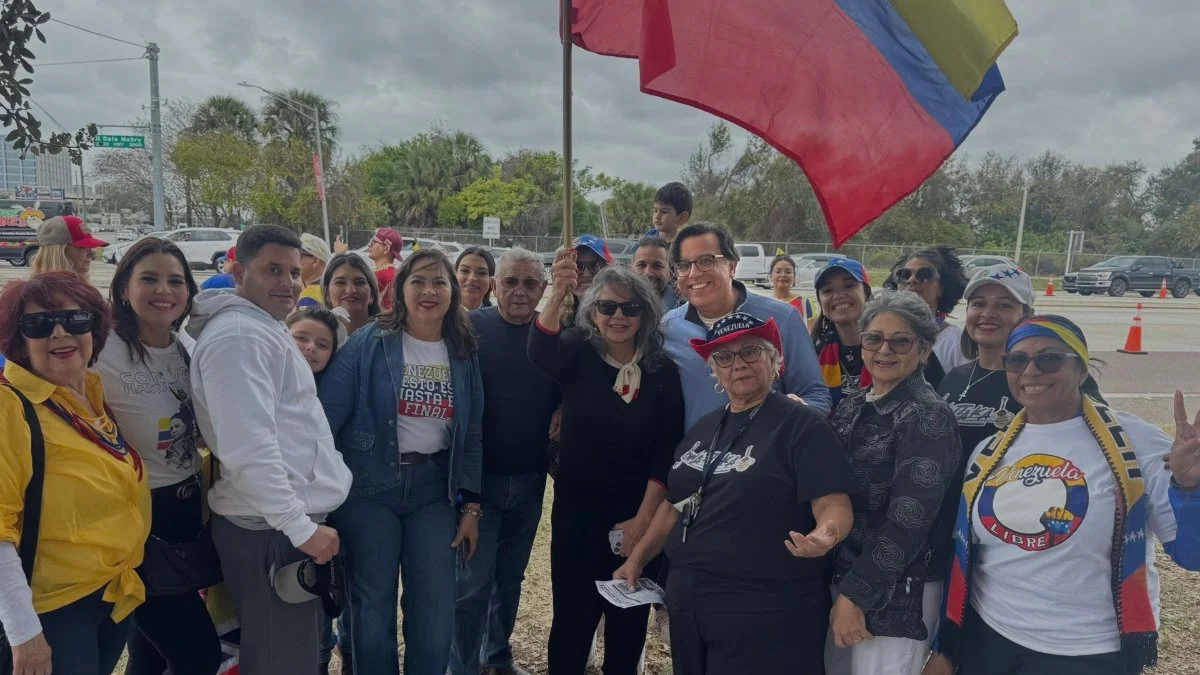
Viera’s own response took a different tone but arrived at a similar conclusion. The District 7 Councilmember centered his remarks on Tampa’s Venezuelan-American community, many of whom fled political repression and economic collapse. Drawing on personal relationships, Viera framed the situation as a humanitarian and moral issue rather than a political one.
He stressed that the matter was “not about Republican or Democrat,” expressed hope for a free and democratic Venezuela, and prayed for wisdom among those making decisions “including all in the Administration.” Notably absent from his statement was any critique of U.S. involvement, its legal basis, or its potential consequences.
What makes both statements unusual is not only their substance, but their source. City Councilmembers typically confine public commentary to local governance and constituent concerns. In engaging with this national and international issue, Clendenin and Viera continued a trend of stepping outside questions of local governance — and they did so in ways that notably aligned with the Trump administration in this case.
Their colleagues did not follow suit.
In a moment of heightened sensitivity for Venezuelan-Americans in Tampa, the two Councilmembers offered empathy and reassurance. But, intentionally or not, they also provided political cover for an aggressive U.S. policy in Latin America.